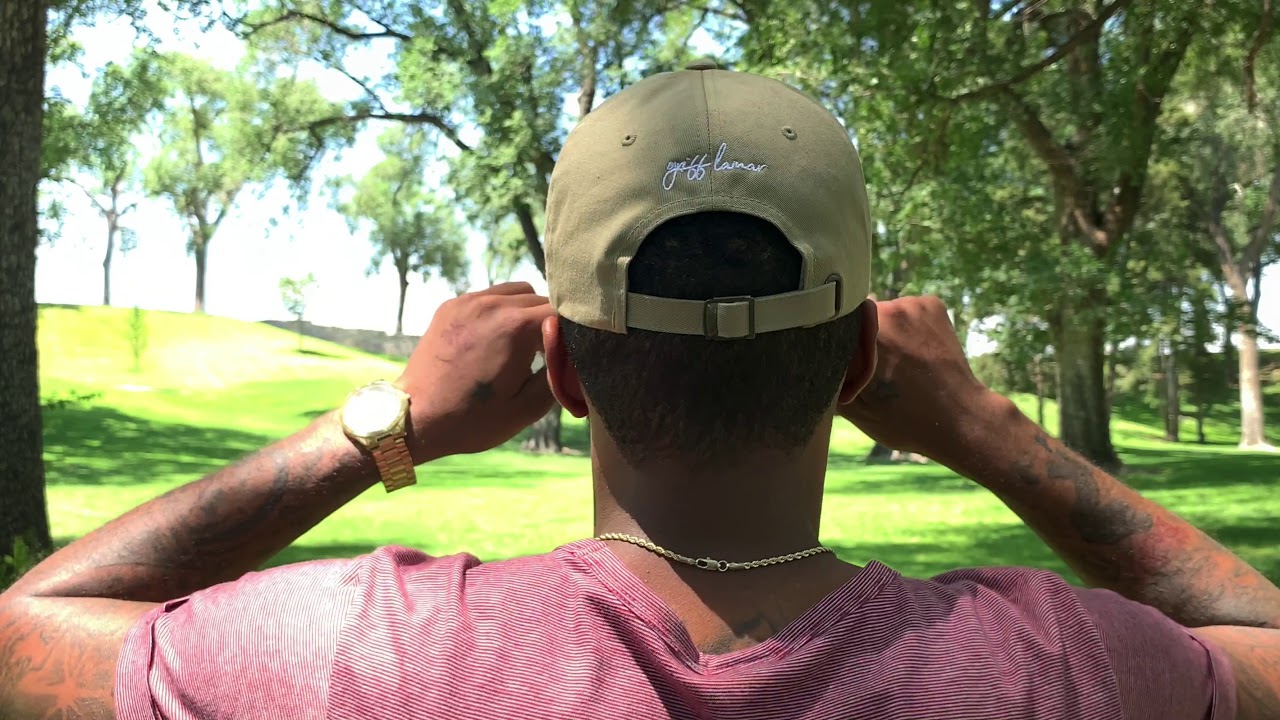

By Chris Castellanos

In a genre of music that celebrates the constant flexing of sex, cars, money, and drugs, one artist, Griff Lamar, decided to take a step back before diving into the alluring shimmer of the professional hip-hop scene. Back in 2012, thousands of people knew Lamar when his song “Super Swag” played on BET’s “106 & Park.” Finding himself in a spotlight, which he had been so eager to grasp, Lamar wasn’t satisfied. For Lamar, there were voices where there weren’t any before, questioning his actions: What does my music mean? What am I saying? Will I be proud of what I have done with my voice? Lamar took a hiatus promising himself that if he ever was going to come back to hip-hop, it was going to be with something to say from the heart.
Fast forward to the start of 2019, Griff Lamar was featured by KRQE for his remake of Michael Jackson’s Thriller, staged at the KiMO Theatre. ABQ-Live had a chance to sit down with Griff Lamar and discuss how he plans to move forward in his return.
Q&A
Can you tell us about yourself?
Griff Lamar, Air Force Veteran, college graduate, father. That should have been first honestly (laughs). Jack of all trades, I film my videos, I edit my videos. I write music, I have a very particular way of doing things that help me to accomplish what I want. I have a lot of ambition and it’s always been there. I am a person who makes it happen, if I want it I get it, nothing is going to stop me.”
Can you tell us a little about your song “Super Swag”?
I was going to UNM during that time. To be honest, it was something to do. I had just gotten out of the military. Because of the military, I had the benefit of going to college. I was more focused on the music. With the success of “Super Swag”, I gained a lot of confidence — it was like I knew this is the route.
To be constantly working is something that seems embedded in our culture, especially for a creator. While on your break, did you feel a lot of pressure to get back to creating music, or were you content in your hiatus?
I have to tell you why I stepped away first: I was conflicted about the message I was giving. I was on that whole wave of doing what everyone else was doing. Being young in your 20’s living that life, going out, partying, drinking, smoking, all of the above. –it was conflicting for me because I may have been living that lifestyle, but it wasn’t something I was necessarily proud of. I had a daughter at the time and as she got older, I started to realize: What am I instilling in her? What am I going to tell her as far as what she should and shouldn’t do? She can look back on me and literally look me up on YouTube. That was a big part of it. I wanted to keep my morals whether or not I saw that quick success.

I had thousands of views on YouTube, but I deleted them because I wasn’t proud of them. I didn’t know what I was going to talk about, but I knew that I didn’t want to talk about that lifestyle anymore. I didn’t want “Super Swag” to be my whole image and that’s it. There is so much more depth to me not only as an artist, but as a person and I didn’t feel that I had the opportunity or platform to really show that. I wanted to please everyone or not please but I wanted the approval. All [of] that made me want to step back. I want to make sure that I look back at what I did and be proud of it, even if they [fans] don’t like it.
In your new songs. “Energy” and “Talk About It,” the idea of a complex past keeps coming up. Can you explain why that is?
Even during the “Super Swag” era, there were plenty of songs that were more emotional, that came from my heart that had to do with my personal experiences with relationships, but those didn’t get as much attention as “Super Swag.” I wrote “Talk About It” during the “Super Swag” era, and there were other songs that I planned to release. “Talk About It” was a song I never really got behind because it was also during a time when I was wondering if I wanted to keep doing this.
Hip-hop and rap started out almost therapeutically to tell the stories of those who seemingly had no voice. How do you explain the shift from real-life struggles to a more materialistic brag?
It’s always been a part of it, even back in the early ’90s and it was so easy to get swept up into it. It’s not like I was lying. I had girls, I had money, I had friends and that whole lifestyle– it was just an aspect of my life I never wanted growing up. I know I wanted to create, I wanted to be appreciated for my talents. That whole lifestyle was a product of my environment. All of us are kind of caught up in this space where we pretend like it is the best thing to live that way, but the reality is that we are using this to cope with our issues — that’s what I was doing. I’m not going to shun people for doing that, because I know, I lived it. I know how easy it is to get sucked into that. I just can’t glorify that kind of lifestyle anymore.
Are there any influences in the music or crazy music video ideas from your experience in the Air Force?
The Air Force introduced me to some really close friends. You meet people from all over and y’all bond up, you’re tight and then go our own ways. I’ve had some of my best friendship experiences in the Air Force because I lived everywhere growing up. This was the first time I got a chance to get familiar with the area. If you asked me where Central and Wyoming are, I could tell you — that was one of the best aspects of the military — a bunch of people in an unfamiliar area and we grew to know it as well as each other. As far as writing music, not right now. As I delve deeper to tell my story, I’m sure it’ll come up.
Authenticity is another running theme in your music Can you talk about why that is important to you?
I experienced this rare thing where everyone was my friend and no one was at the same time. I didn’t have anyone checking on me or asking how I was doing I had people asking if I wanted to go party or if I knew where the party was. No one cared about asking about me. They wanted to tell me about their cousin who raps, their brothers, sisters, uncles, their mom. They wanted to tell me about all these people who hated me and then I would see these people in person and they would make a beeline for me, shake my hand, pat me on the back and tell me I’m doing a great job. I didn’t know how to feel about it. I think everyone wanted to be cool with me because they didn’t know how far I was going to go. They would say how they really felt with friends, but in public show open support to me and it was confusing. I honestly had more respect to the people [who] stood by what they said about not liking me or my music.
The way I was raised, you communicate your differences. Communication was the way you bridge the gap between personalities and differences. It comes up in the music because it’s a reality. I’m not going to pretend I don’t have my issues, because I do, just like everyone else, but I am self-aware. I don’t get in my own way and if I do, I have people around me who are going to help me.
What are your plans for the future?
I definitely wanted to shoot a music video for “Energy,” [so] I’m putting things together for that. I have a couple of other songs that have already been released that I am not actively pushing for I also plan to do videos for. I am starting a clothing line, and I designed my own logo. I am really trying to dig my hands into every aspect of this. I’m going to hit the ground running, go places. If you like good music, good art, I’m your guy. More than anything good work that I’m proud of.
Griff Lamar’s new music can be found on Spotify, Apple Music, SoundCloud, and YouTube.